

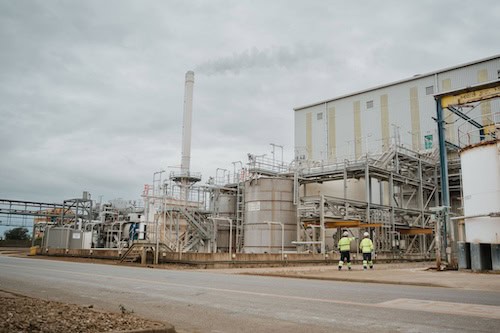
When Venator’s site in Greatham fell into administration last year, it looked like curtains for the titanium dioxide facility. A de-industrializing UK has gotten used to chemical plants disappearing, so there was no national outcry when the two production lines came to a halt.
Permanent closure wasn’t to be. In the midst of an industry downturn and fierce competition from China, no other than Jiaozuo City, Henan-based LB Group stepped in to save the facility. The new owners renamed the company after its historic Tioxide brand and, in less than four months, had the first of its two 75 metric-ton production lines restarted.
“I was there on administration day, so to come out the other side and to bring the team back up to strength and then see the cooling tower on the black end and the finishing plant running, it is emotional,” Tioxide Managing Director Karen Askwith said in an interview with chemicalESG.
Needless to say, LB Group planting a flag in the UK is coming under intense scrutiny, especially as Chinese imports into Europe have been increasing. Competitors are struggling with the math of restarting a facility in a high-cost location in the midst of a slump. According to Tronox CEO John Romano, oxidation lines running below 70% capacity “don’t run very well.”
The fear is that LB Group will just import cheap pigment from China for processing in the UK and, from there, sell into mainland European markets. The EU already imposed anti-dumping duties on TiO2 in 2025 while competitors in the US and Europe are closely watching trade flows. As Tronox’s Romano put it on a recent call: “there is a significant body of work that is going on around maintaining and optimizing fair trade.”
Askwith strongly refutes this suggestion, pointing out that Greatham has restarted end-to-end manufacturing.
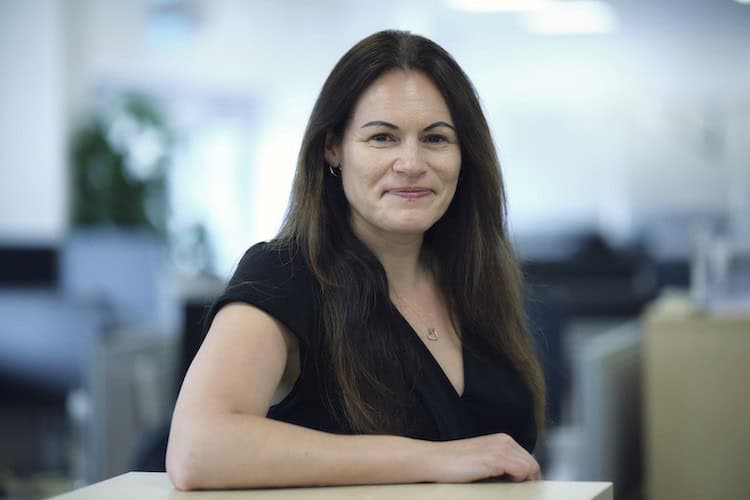
“I understand, and if I was one of our competitors, I am sure I would probably be thinking the same thing, but it just isn’t what we are doing,” Tioxide’s Askwith said.
“I could take people to the Greatham site and show titanium ore going up the conveyor into the chlorinator and running all the way through to final product. We are well aware of what our competitors are saying about us but the business plan we have has two production streams operating through the complete end-to-end manufacturing process.”
LB Group and Tioxide are moving quickly. Output at the first line has already reached 50% manufacturing capability. The second line should be back up early next year. Maintenance work and commissioning processes are also underway, and LB Group has already earmarked funds for efficiency improvements at the facility, according to Askwith.
“The plan for Greatham is to go back to full manufacturing capability,” she added. “That is the reason why we have already started the second phase of the recruitment program.”
Askwith, who previously worked at Invista and SABIC before joining Huntsman, feels Greatham was hindered by Venator’s wider challenges.
“Greatham is now part of a company owned by the world’s largest TiO2 manufacturing organization, bringing access to investment, technical expertise and a long-term commitment to the site,” she added. “That puts the business in a fundamentally different position for the future.”
The early indications are good, according to Julie Reid, Vice President of Commercial Operations. Customer contracts linked to the second production line are already being secured. Demand has been strong for chlorinated process grades including TIOXIDE TR48, used in flexible food and consumer-product packaging, and TIOXIDE TR81 for premium coatings.
“We see enough potential for the long term and are just concentrating now on developing our pipeline and working with our customers to restart that supply,” Reid said.
Reid managed a former Huntsman TR52 inks business that LB Group acquired in 2014 through an antitrust divestment. She said the strategic rationale for acquiring the site extends beyond the Tioxide brand itself. Having entered chloride-process TiO2 production in 2015, LB Group’s portfolio is now more balanced vis-a-vis the sulfate process, allowing for benchmarking across technologies and sites.
Just having a manufacturing footprint inside Europe reduces supply chain risks associated with shipping product from Asia. The company can avoid the approximately three-month lead times associated with importing while taking advantage of LB Group’s global access to raw materials and procurement scale.
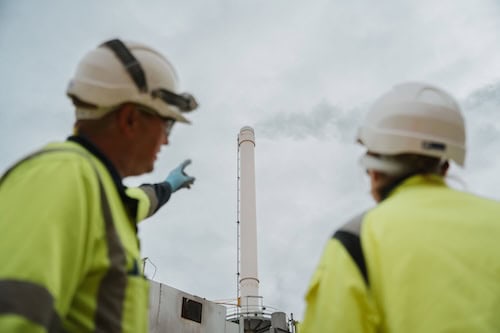
Ownership could also create new operational synergies and technical benefits.
“There are always learnings that you can take,” Askwith said. “Where there are learnings and comparisons, and where benchmarking can be done, we will be doing that to understand how we can improve.”