

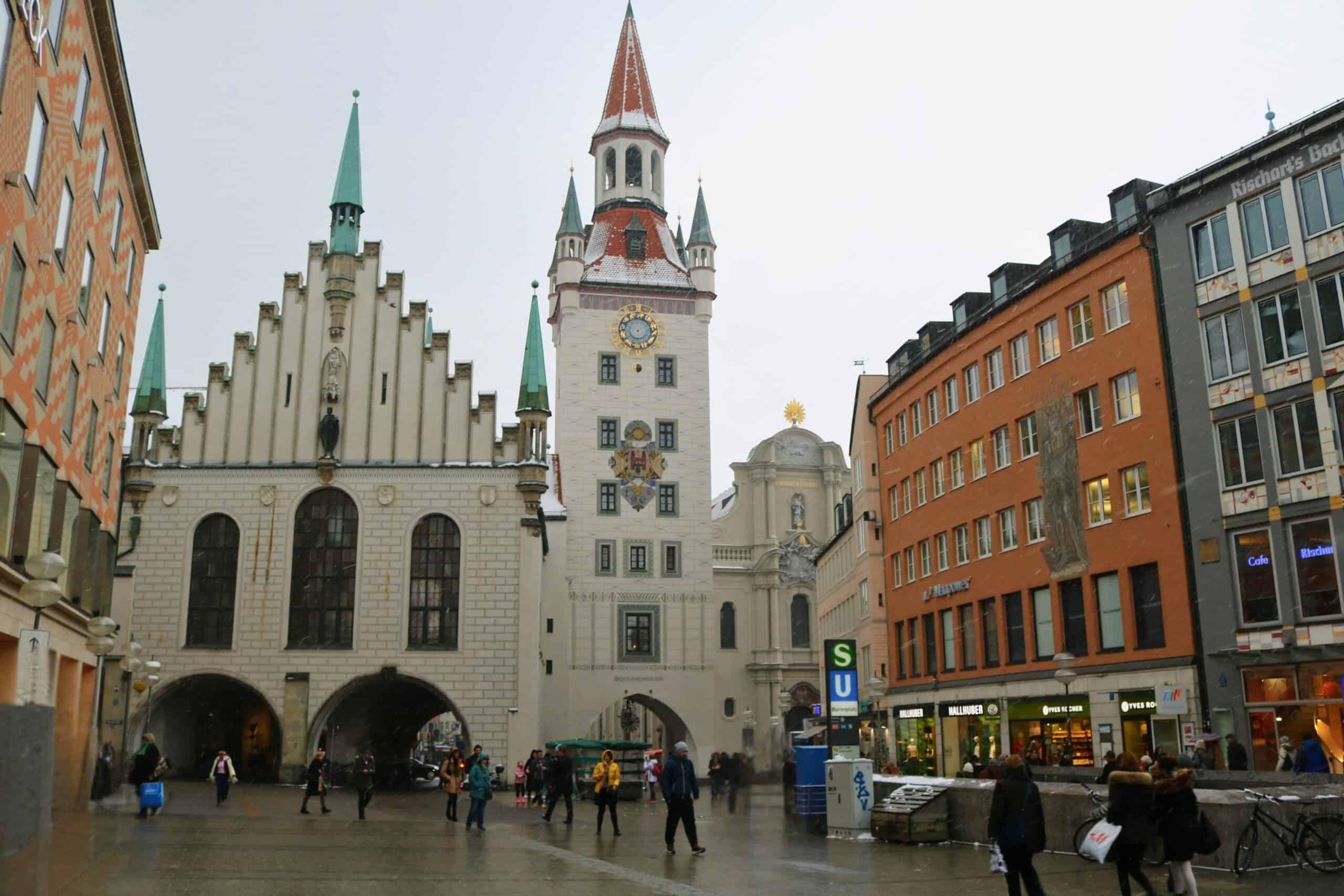
Responsibility for a significant slice of Europe’s chemical industry is shifting to an unlikely setting: an area of Munich, better known for its museums, sidewalk cafés and affluent residential streets.
SABIC today announced two major divestments worth a combined $950 million, on an enterprise value basis at least. The buyers of the polycarbonates and polyolefins assets — private equity firms Mutares and AEQUITA, respectively — both hail from Munich, as did the runner-up, Aurelius.
Lured by the lakes, the golf courses, and the skiing, there are plenty of PE firms in Munich, just not so many involved in commodity petrochemicals and polymers. Frankfurt, in the heart of the Rhine-Main metropolitan region, is a more popular spot for chemical investors, while consultants tend to favor Dusseldorf for tax purposes.
Known for industrial carve outs in industries like automotive and construction, Mutares and AEQUITA are newcomers to chemicals, yet they are taking on some of the most challenged assets in the industry, ones that are either losing money or making very little of it. AEQUITA only recently made headlines for snapping up parts of LyondellBasell’s European operations.
There is very little in the way of upfront payments here, so the deals are cheap punts on the future of the industry in Europe.
Mutares will acquire SABIC’s polycarbonate operations in Europe and the Americas for an upfront cash payment of $56 million. Including earn-outs, the deal could reach $450 million on an EV basis. AEQUITA, meanwhile, is taking over SABIC’s European plastics business—assets that include former DSM and Huntsman sites in the U.K., Belgium, the Netherlands and Germany. That transaction carries an EV of $500 million, though AEQUITA will pay nothing upfront. Instead, SABIC will rely on promissory notes tied to future cash flows, which are expected to benefit from synergies with the recently purchased LyondellBasell olefin and polyolefin plants.
“These deals highlight the pressures facing the chemicals industry and indicate that its leading players – especially in Europe – may soon look very different from the long-dominant diversified producers,” said Edward Middleton, a director at advisory firm etasca.
While their customer-facing experience may translate into competitive advantage in chemicals, needless to say, there is a fair amount of skepticism. Europe’s chemical industry is under pressure from high energy costs, weak demand, and new capacity in China, and some executives question whether private equity can deliver. Of the two deals, Mutares’ assets are viewed as the stronger candidate for a turnaround-and-sale in four to five years’ time, given SABIC’s former position as the second-largest polycarbonate supplier in the U.S. after Covestro. The sale of engineering thermoplastics marks the unwinding of SABIC’s $11.6 billion acquisition of GE Plastics in 2007—a deal once seen as transformative.
If the new owners opt to maximize cash and run the assets into the ground, regulators could intervene, particularly in France, where plant closures remain politically sensitive even amid industry rationalization. AEQUITA, which now controls LyondellBasell’s Berre polymer site in France, will face formidable competition from BASF and INEOS, companies renowned for running plants efficiently.
SABIC in part uses the elegant-yet-toxic phosgene route to make polycarbonates. Such are the dangers of the gas, used in World War I, that competitor Covestro built its plant on a sunken site that can be quickly flooded with rain water to avoid vapors leaking in the event of an accident or force majeure.
Despite these concerns, the Munich firms may not stop here. Should ExxonMobil, Dow, or Shell decide to divest European assets, Mutares and AEQUITA could be well-positioned to strike again. Their upfront investments have been minimal—AEQUITA even received a dowry to take over LyondellBasell’s operations—and other private equity players may hesitate to compete given the two firms now have an established base in chemicals. BASF, for its part, is exploring roll-up opportunities but may not require physical assets to execute its strategy.